

Meet Our Tutors: Rebecca


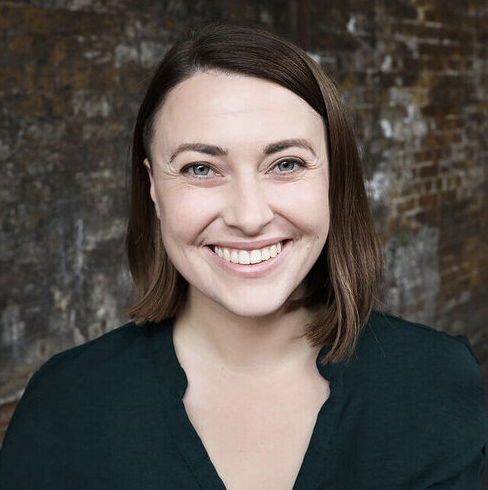
Rebecca grew up in California, but she’s called the UK home for over a decade – after originally moving to continue her theatre training. In both her creative and administrative roles, she became the go-to person for proofreading and editing. So when she discovered that Knowadays trained proofreaders to work in both US and UK English, she saw the perfect opportunity to formalize what she was already doing.
Read on to find out how Rebecca’s background in theatre and teaching shapes her approach to tutoring, plus what she’d say to anyone who thinks their past experience won’t translate into a proofreading career.
Tell us a bit about yourself. Where are you based, and what does your background look like?
Hi! I’m currently based in Northern England, but I was born and raised in California. I moved to the UK about a decade ago to continue my training in theatre, and I have lived and worked here ever since.
How did you end up working in proofreading and editing? What drew you to it in the first place?
Once I got settled in the UK, I took on administrative roles alongside my creative work. In both areas, I regularly became the go-to person to proofread and edit outgoing materials: web copy, press packets, pitch documents, applications, and more. But after living abroad for so many years, I was struggling to distinguish between US and UK English rules for spelling and punctuation. When I learned that Knowadays specifically made a point of training learners to proofread in both dialects, I realized I had an opportunity to clean up my process and turn one of the skills I was already practicing into an official income stream.
What does your working life look like today?
I move between several different roles! Along with tutoring at Knowadays, I also work as a teaching assistant for theatre courses; over the past few years, I’ve taught acting, playwriting, and directing. Between busy periods, I work on new writing projects with local theatre companies.
When did tutoring come into the picture, and what made you want to do it?
I have to track this back a little bit to explain how it came full circle! One of the key skills I gained from my original Knowadays training was how to write effective notes and feedback for clients. When I combined this training with my other creative work, I was able to progress to leadership roles on writing projects for audio dramas and new theatrical plays. Through those projects, I then was able to access teaching opportunities at a university near me, where I learned how to run workshops, deliver lectures, and mentor students one-to-one. So when I saw that there was an opening for a new tutor on the Knowadays team, I was excited to apply; it was another opportunity to make connections between all the different kinds of work I do.
What do you enjoy most about working with learners?
I love learning how other people think! Proofreading is problem-solving: The first step is detecting an error, and the next is deciding how best to resolve it (and there are usually several different ways to do this!). When learners come to us with questions, or when we review their final assessments, we get to talk through their full process, from their first reading of the text through to their final edit and everything they thought along the way. Learners come to Knowadays from so many different places and with so many different experiences, so I get to learn a lot about different writing styles, communication methods, and niche subject areas.
What does the support you offer learners look like day-to-day?
Grading and feedback calls are a big part of it, but we’re on hand to help in a lot of other ways! We offer a lot of support via email – learners send us questions about different proofreading concepts, complete with style guide quotes, sample edits, or examples of the issue they’ve found out in the wild. I can help clear up any confusion and signpost them to new resources to help their work in future (or check in with the rest of the tutor team for help if I get stuck!).
Sometimes the questions are pretty straightforward, but they can also lead to deeper discussions about how to manage a freelance career and deal with different types of clients and texts (editing for sales copy as opposed to proofreading for fiction, for example!). So we’re supporting learners as they develop their proofreading skills first and foremost, but we’re also able to help with industry questions.
How do you typically approach giving feedback, and what do you think learners value most about it?
My rule is that I am not psychic: All I know for sure is what ended up on the page. If I want to know why a learner made a particular choice with the text, I have to ask! This helps me avoid making assumptions about their work. Even if the fix they’ve tried to put in place isn’t quite the right fit for the error, it demonstrates a different insight that will be useful for something else.
What changes do you see or hear about in learners by the end of a course?
It’s not necessarily the main goal of our training, but I’ve noticed that as learners gain confidence in their skills, they also gain a deeper appreciation for how their past work experience or training relates to the work they’re preparing to do in future. In early calls and emails, learners will sometimes share concerns that their other experiences are irrelevant; some worry that by developing a new skill set, they’re completely starting over. I don’t think this is ever true; all our experiences with reading, writing, and learning become part of our proofreading and editing work. By the end of their experience with the course, I think they realize that too.
Is there anything you wish you’d known when you were starting out in editorial work?
Be nice to your eyes! Take breaks!
What would you say to someone who’s thinking about taking a course but isn’t quite sure yet?
I really do mean this in the most positive way: There will never be a perfect time to start something new. But even if you have to start, stop, and then start over after a while (I definitely did with my proofreading training!), that bit that you originally started will cook in your brain, making the next time you start up again a bit easier.
What do you like to do when you’re not working? (Any recent reads or other recommendations welcome!)
I’m rebuilding my DVD collection! When I moved to the UK, I tried to take as little physical media with me as possible. (Plus, region-locking on DVDs used to be such a big headache, so I was not motivated to lug all those discs across the pond!) But I’ve got a universal DVD player now, and my city has tons of great vintage/thrift shops.
Expand Your Portfolio with Knowadays
Rebecca now splits her time between tutoring for Knowadays, teaching theatre, and working on new writing projects – with proofreading running through all of it.
Whether you’re looking to build a new career or gain new skills to apply in a current role, our Becoming A Proofreader and Becoming An Editor courses offer self-paced learning with no time limits. Plus, you’ll get one-on-one support from tutors such as Rebecca throughout. You can also buy both courses as a bundle to save 15%. Try two free lessons to see if it’s right for you.






Your email address will not be published.