
Meet Our Tutors: Laura


Contents
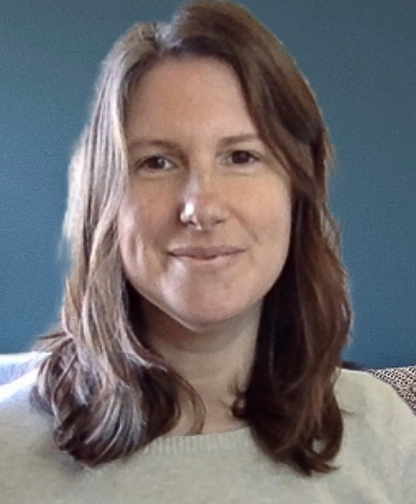
Laura’s path to proofreading and editing wasn’t a straight line. After starting out in analytical science and stepping away from work to raise her children, she moved between a few different roles, searching for the right combination of flexibility and fulfillment.
It was while searching the internet for work-from-home job ideas that proofreading kept catching her eye. She’d always been a natural at spotting errors, but she’d assumed an English degree was a prerequisite – until she came across Knowadays and discovered that wasn’t the case at all. The promise of guaranteed work at the end of the training was the push she needed to take the plunge.
She hasn’t looked back since! Today, Laura splits her time between tutoring for Knowadays and taking on freelance proofreading work with Proofed and beyond.
Read on to find out what Laura would say to anyone who’s talked themselves out of giving proofreading and editing a try.
Tell us a bit about yourself. Where are you based, and what does your background look like?
I live in a village in the southwest of England, and I’m very much made for the countryside! I began my working life in analytical science, but I didn’t love it. After taking a break for a few years to birth and hang out with a couple of tiny new humans, I never returned to the lab. Once my youngest was at school, I worked as an exam invigilator before taking a job with more regular hours as a primary school teaching assistant. I moved on to a couple of other jobs from there, searching for something with the perfect balance of personal fulfilment and flexibility to fit around family.
How did you end up working in proofreading and editing? What drew you to it in the first place?
On the aforementioned quest for a fulfilling yet flexible job, I would frequently trawl the internet for “work from home” ideas. The thought of being able to handle a sick day for the kids without stressing over taking time off work or calling in backup was very appealing. And I’m a classic introvert, so the idea of all that lovely time alone in a quiet house was another big draw.
One thing that would always come up on these home-working lists was proofreading, and my longstanding penchant for spotting errors in texts far and wide suggested that I might be quite good at it. However, assuming that an English degree (which I didn’t have) would be a prerequisite, I quickly dismissed it every time. That finally changed when I came across Knowadays back in 2019 (known then as Proofreading Academy), which was offering work at the end of the training if I could pass the final assignment with a high enough score. I was skeptical at first, but interaction with the customer support team gave me enough confidence that the offer was legitimate, and taking a couple of free lessons left me with a good impression of the course’s quality, so I took the plunge!
What does your working life look like today?
It’s pretty varied! My tutor shifts with Knowadays take up the best part of three days per week, and I’m employed by another company as a proofreader for another two. Around that, I fit in work for clients when it comes along, and I am active on a couple of projects at Proofed. At busy times, I can end up working on evenings or weekends, but I try not to make a habit of it.
When did tutoring come into the picture, and what made you want to do it?
It wasn’t something that was on my radar at all, but I received an email near the end of 2020, saying that there were openings for a couple of new tutors at Knowadays and that I was invited to apply based on the quality of my work at Proofed. It was a daunting prospect, but that validation of my skills gave me the confidence boost I needed.
I could see that tutoring would fit well with my past work experience, and I’d had such a positive time as a learner with Knowadays that I knew this was a company I could be proud to work for. And I liked the idea of regular hours and working with a team (albeit from the safe distance of my quiet introvert space), so I thought, “Why not?!”
What do you enjoy most about working with learners?
It’s probably how much I learn through the process of helping a learner understand something. There’s always a new question – someone coming at a topic from an angle I’ve never considered before. The process of researching the nuances of language and coming up with a clear explanation as to how something works, and why it works that way, keeps me learning and growing – and keeps me on my toes!
It’s also extremely rewarding to be even a small part of helping someone to acquire the skills and knowledge they need to reach the goal they had in mind when they signed up for their courses, which could be to create a whole new career or perhaps just to become more confident with editing their own work.
What does the support you offer learners look like day-to-day?
Learners can email the tutor team anytime they feel stuck or unsure or just want some human interaction or moral support along the way. Sometimes, a learner will ask us to review a practice exercise they have worked on, and we’ll happily provide feedback and clarification.
There’s also the option for learners to schedule a call with a tutor, which we do via Google Meet. As well as being commonly used for reviewing final assignment feedback and talking about next steps, this is often the preferred way to get to the bottom of technical issues. The ability to share screens and watch or model processes in real time can save a lot of time and guesswork in email exchanges.
How do you typically approach giving feedback, and what do you think learners value most about it?
We provide a lot of detail in our feedback, and we drill down into the specifics – not just on errors that were missed in the texts but also on procedural and best-practice issues. Our learners tell us that they really appreciate this attention to detail, and we know that it’s an invaluable tool for helping people to develop their skills and refine their processes, preparing them to take on work in the real world.
However, we also know that receiving critique of your work can be difficult, even when you know it’s good for you. Nobody’s going to come away encouraged by feedback that only lists what they could have done better, so we always make sure that our feedback – be it on a final assignment or a practice exercise – is front-loaded with the positive. This helps the learner to consolidate those things that they are already doing well.
One advantage of having a tutor team made up entirely of Knowadays graduates is that we have all been on the other side of the equation, receiving feedback on our own final assignment and, beyond that, on our work at Proofed! Knowing what it’s like to be on the receiving end helps us to understand both what are the most useful things to include and how it might be best received.
What changes do you see or hear about in learners by the end of a course?
We often don’t hear from learners until they are quite a way into a course, so it’s not very common to get a comparison between where someone was at the beginning compared with where they get to by the end. But I’ve had a lot of learners tell me that they were surprised by how much they learned on our courses, having embarked on the process with an already strong grasp of the English language and perhaps even prior experience in the industry.
Is there anything you wish you’d known when you were starting out in editorial work?
I wish I had understood quite how much variety there is in different clients’ preferences and approaches, and that sometimes you just have to learn to be ok with approaches you think are less than ideal. Becoming A Proofreader and Becoming An Editor both emphasize the importance of consulting the client’s style guide and sticking within a brief, but there are times when that’s challenging – when you have to step back after your job is done and let a client’s choices be their own, even if you think they could do so much better!
What would you say to someone who’s thinking about taking a course but isn’t quite sure yet?
I think it would depend on what’s making them unsure. If it’s not knowing whether they would get on with the course style, then I would strongly recommend signing up for a couple of free lessons and trying it out. The lessons are taken straight from the main courses, so they’re a true representation of what you can expect if you sign up for real.
But we recognize that there are a whole host of reasons someone might not feel sure, even then – be it wondering about the impact of AI on the industry, doubting your own suitability for freelance work, questioning whether the tutor support will meet your needs, or thinking that the work opportunity with Proofed seems too good to be true! To someone in that position, I would say, “Get in touch!” We’ve all been there, we all understand, and we will give you honest answers to your questions to help you decide whether Knowadays courses are right for you. We’re truly invested in our learners’ success, and that starts from being transparent about what we offer.
What do you like to do when you’re not working? (Any recent reads or other recommendations welcome!)
I do like a good book! For a good few years, I got out of the habit of reading fiction, but I’ve found my way again this year (which I credit to a tutor colleague with a throwaway question at our Knowadays Christmas party last year!). Standout books so far are Where the Crawdads Sing by Delia Owens and Bob Mortimer’s The Satsuma Complex. They’re utterly different in style but equally enjoyable in their own ways.
I also enjoy spending time in nature; it’s definitely my happy place. Much of the time, I’m accompanied by my dog, a golden cocker spaniel, and I have to go to great lengths to try to be more interesting to him than the pheasants we invariably encounter on our travels. When the fields dry up enough for me to leave my welly boots behind, I put on my trainers and replace some of the walks with cross-country runs. Nothing too far, or too fast, but enough for a good endorphin boost before sitting down at my desk for the day!
Find Your Career Fit with Knowadays
After years of searching, Laura found what she was looking for – a role that draws on her strengths, fits around her family life, and keeps her learning.
Thinking about making a similar change? Our proofreading course and editing course (Becoming A Proofreader and Becoming An Editor) are completely self-paced, with no time limits and plenty of one-on-one support from tutors who’ve been exactly where you are. You can also buy both courses as a bundle to save 15%. Not sure yet? Try two free lessons first!







Your email address will not be published.